
Interior Design Step by Step Guide for Homeowners
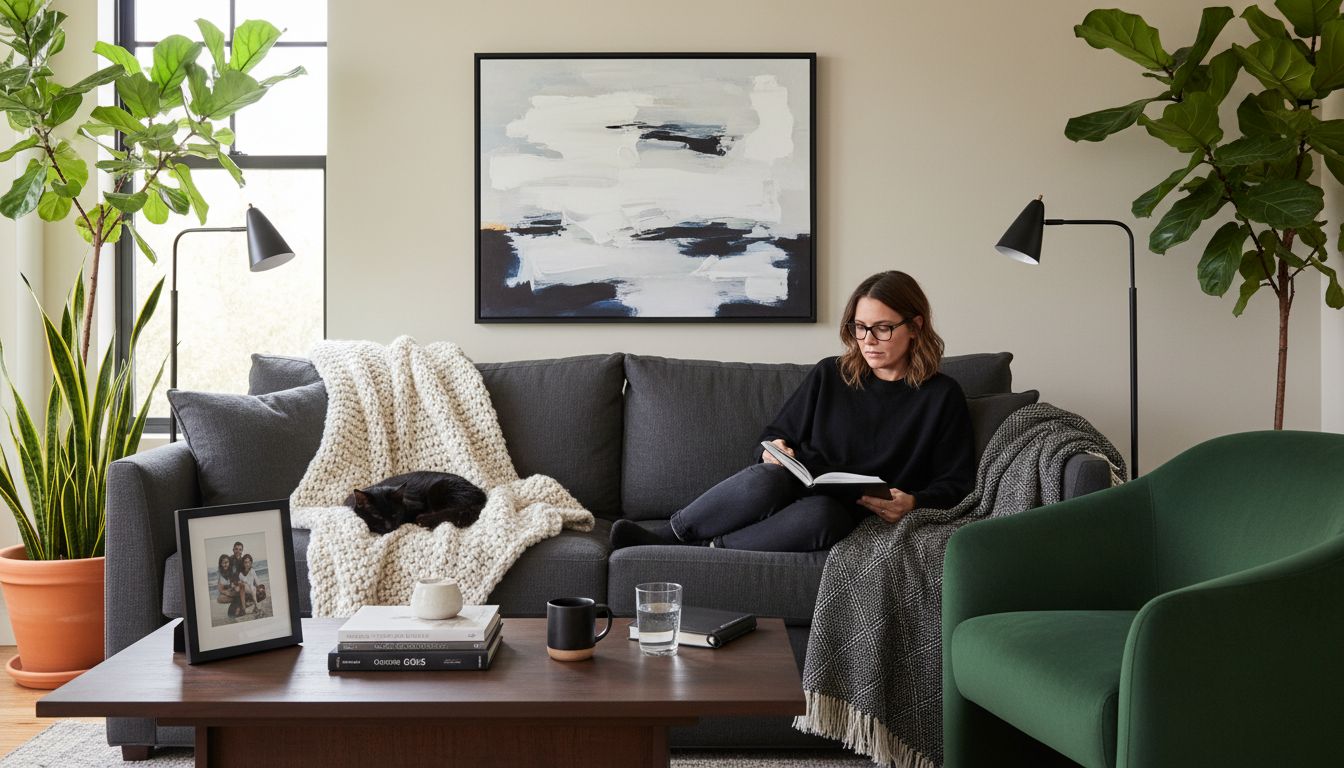
Did you know that nearly 85 percent of homeowners feel more satisfied after personalizing their living spaces? Interior design goes beyond surface decoration and has a real impact on daily comfort and well-being. Crafting spaces that reflect your lifestyle, style preferences, and budget can shape how you enjoy every moment at home. This practical guide reveals easy steps for transforming any room with confidence, no matter your experience level.
Table of Contents
Quick Summary
Key Point | Explanation |
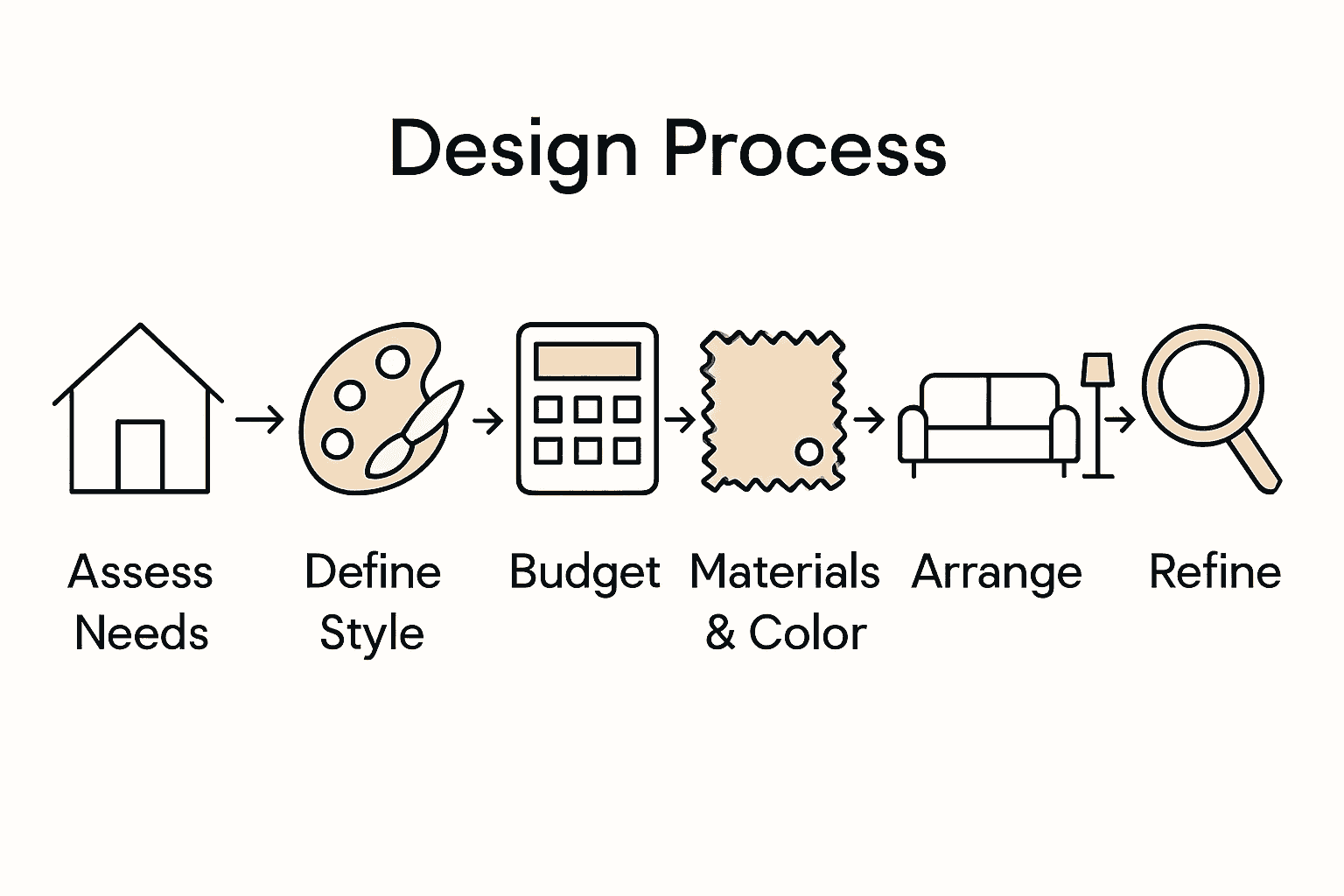
1. Assess Your Lifestyle Needs | Conduct a thorough review of how you use your living spaces to determine functional requirements and personal preferences. |
2. Define Your Design Style | Collect visual inspiration to clarify your unique interior design style, blending elements that resonate with your taste. |
3. Set a Realistic Budget | Categorize your expenses into essential improvements, key furniture, and decorative elements, ensuring financial control throughout your project. |
4. Select Thoughtful Materials and Colors | Create a color palette and choose materials that enhance the mood of your space, keeping harmony in mind with existing architecture. |
5. Arranging and Evaluating Furniture | Establish focal points and ensure proper flow in furniture arrangement, and continuously refine your design for cohesion and comfort. |
Step 1: Assess Your Needs and Lifestyle
Creating a stunning interior design starts with understanding your unique lifestyle and requirements. According to OpenScholar, a comprehensive Home Lifestyle Assessment helps designers translate personal histories and family dynamics into meaningful spatial solutions.
Begin by conducting a thoughtful inventory of how you actually use your living spaces. Ask yourself key questions: How many people live in your home? What are your daily routines? Do you work from home? Do you entertain frequently? Are there children or pets who require durable surfaces? Document these details to create a clear picture of your functional needs. Understanding your lifestyle means more than measuring square footage its about capturing the essence of how you move through and experience your home.
Visual preferences matter tremendously. Research from ArXiv suggests aesthetic choices can be quantified using advanced techniques that predict individual tastes based on color harmony and design complexity. This means your personal style is not just subjective but can be systematically understood. Consider creating a mood board or digital collection of images that resonate with you furniture layouts that inspire you and color palettes that make you feel comfortable. Renovate vs. Redecorate: Knowing When Each Is Needed can provide additional insights into making strategic design decisions.
Pro Tip: Photograph your current living spaces from multiple angles. These images will become invaluable references for understanding traffic flow furniture placement and existing architectural elements when you begin designing.
Step 2: Define Your Interior Design Style
Now that you understand your lifestyle needs its time to explore and define your unique interior design style. According to MasterClass, interior design encompasses a rich spectrum of styles from Scandinavian minimalism to glam maximalism, each offering distinctive elements you can personalize.
Start by gathering visual inspiration through platforms like Pinterest, interior design magazines, and home decor websites. Create a digital or physical mood board that captures design elements that resonate with you. Pay attention to color palettes, furniture shapes, textures, and overall aesthetic feelings. Are you drawn to clean lines and neutral tones? Or do you prefer bold colors and eclectic arrangements? Your Style, Defined can help you navigate this exploratory process.
Research from Wikipedia highlights the beauty of transitional design a style that beautifully blends traditional and modern elements. This approach offers flexibility for those who dont want to commit entirely to one rigid aesthetic. Consider exploring hybrid styles that mix contemporary furniture with classic architectural details or combine minimalist principles with warm textural elements.
Pro Tip: Collect physical fabric swatches, paint samples, and material examples. Physical touchpoints can help you understand how different design styles truly feel in your space and whether they align with your personal comfort and aesthetic preferences.

Step 3: Set a Realistic Budget Plan
Budgeting for your interior design project is a critical step that requires careful planning and honest self assessment. The Franklin Report provides valuable insights into making informed financial decisions for home renovation projects, helping homeowners navigate the complex landscape of design investments.
Begin by categorizing your expenses into three primary buckets. First, allocate funds for essential structural or functional improvements that impact your homes livability. Second, set aside money for key furniture and foundational pieces that define your space. Third, reserve a portion of your budget for decorative elements and finishing touches. A good rule of thumb is to divide your total budget approximately 50% for major investments, 30% for furniture, and 20% for accessories and decor.
Hammer or Hire? The Real Cost of Doing It Yourself can provide additional perspectives on managing project costs.
Research from The Decoration of Houses emphasizes the importance of balance and symmetry in design planning which directly translates to financial strategy. Always include a contingency fund of 10 15% to cover unexpected expenses or design opportunities that might emerge during the project. This buffer prevents financial stress and allows creative flexibility.
Pro Tip: Track every expense meticulously. Use a spreadsheet or budgeting app to monitor spending in real time, ensuring you stay within your planned financial boundaries while creating the interior of your dreams.
Step 4: Select Materials and Color Schemes
Selecting the right materials and color schemes is where your interior design vision truly comes to life. According to ArXiv, modern design techniques now utilize advanced fuzzy logic and image processing to help predict aesthetic preferences with remarkable precision.
Start by creating a comprehensive color palette that reflects your personal style and complements your homes existing architecture. Consider the mood you want to create in each space warm and inviting living areas might lean towards soft neutrals with rich textural elements while a home office could benefit from more energizing tones. How To Elevate Your Spaces Through Color can provide additional insights into color psychology and strategic selection.
Research from Wikipedia highlights the power of transitional design principles focusing on neutral color palettes and thoughtful texture mixing. When selecting materials consider how different surfaces interact combining smooth surfaces like glass or polished metals with softer elements like wool throws or textured wall coverings. This approach creates visual depth and prevents spaces from feeling flat or one dimensional.
Pro Tip: Always test color and material samples in the actual space under different lighting conditions. What looks perfect in a showroom might appear completely different in your homes unique environment.
Step 5: Arrange Furniture and Decor
Arranging furniture and decor transforms your interior design from a concept to a lived experience. According to ArXiv, emerging AI technologies are revolutionizing how homeowners approach interior layout by generating personalized room configurations with unprecedented precision.
Start by establishing a focal point in each room and create furniture arrangements that naturally flow around this central element. Consider traffic patterns and ensure comfortable movement between key areas. Maintain breathing room between furniture pieces to prevent a cluttered appearance. How to Style Vignettes & Little Moments can help you understand how to create visually interesting spatial compositions that tell a story.
Research from Wikipedia showcases how design styles like Hollywood Regency demonstrate the power of bold contrasts and strategic placement. When arranging decor think about creating visual balance through symmetry and asymmetry. Mix different heights textures and scales to add depth and interest to your space. Group decorative items in odd numbers typically three or five pieces which creates a more dynamic and pleasing visual arrangement.
Pro Tip: Before finalizing furniture placement use painters tape to outline furniture footprints on the floor. This helps you visualize scale and movement without physically moving heavy pieces multiple times.
Step 6: Evaluate and Refine Your Design
The final stage of your interior design journey is about critically examining and perfecting your vision. According to ArXiv, cutting edge RoomDiffusion AI models now offer sophisticated tools for evaluating and refining interior designs with unprecedented precision and personalization.
Begin by stepping back and viewing your space objectively. Take photographs of your completed design to help you see the room more neutrally. Compare these images against your original mood board and design goals. Look for areas that feel disconnected or lack cohesion. Hammer or Hire? The Real Cost of Doing It Yourself can provide additional perspective on making strategic adjustments without overspending.
Research from ArXiv highlights how advanced generative AI technologies like VIDES are transforming design refinement by allowing users to visually edit and adjust their concepts. Trust your instincts but also be open to subtle changes. Sometimes small tweaks in color balance texture or furniture placement can dramatically elevate the entire rooms aesthetic. Pay attention to how the space feels not just how it looks experiment with moving pieces around until everything feels harmonious and true to your original vision.
Pro Tip: Live with your design for a few weeks. Take note of how the space functions in daily life and be willing to make incremental adjustments as you understand your needs more deeply.
Transform Your Home with Expert Interior Design Support
Feeling overwhelmed by the many steps involved in turning your house into a beautiful and functional home is common. This guide highlights the challenge of balancing lifestyle needs, defining your unique style, and managing budgets while selecting the perfect materials and arranging furniture thoughtfully. If you want to move beyond theory and see real results, working with professionals who understand these complexities can make all the difference.
Discover how Smith Interior Design brings personalized solutions to life with attention to detail and a proven process that respects your lifestyle. From initial style definition to refined furniture placement, we help you avoid costly mistakes and create spaces that feel truly yours. Ready to see inspiring examples and client stories? Visit Smith Interior Design and explore how our expert team can guide you at every step. Don’t wait to make your dream home a reality. Start your journey today by learning more about Your Style, Defined and understanding the choices between Renovate vs. Redecorate. Take control of your design project with trusted professionals now.
Frequently Asked Questions
How do I assess my needs and lifestyle for interior design?
To assess your needs, take inventory of your daily routines, the number of people living in your home, and any specific requirements like workspaces or children. Document these aspects to create a clear reflection of how you use your living spaces.
What steps can I take to define my interior design style?
Start by gathering visual inspiration from magazines and online platforms to create a mood board that encapsulates the design elements you love. Pay attention to aspects like color palettes and furniture shapes to clearly identify your personal style.
How do I create a realistic budget for my interior design project?
Categorize your budget into three main areas: structural improvements, essential furniture, and decorative elements. A good approach is to allocate approximately 50% to major investments, 30% to furniture, and 20% to decor.
What materials and color schemes should I choose for my interior design?
Develop a color palette that reflects your personal style while also considering the mood you want to create in each space. Test color and material samples in your home under different lighting conditions to ensure they align with your vision.
How should I arrange furniture and decor in my living spaces?
Begin by establishing a focal point in each room and arrange furniture around it for natural flow. Use painter’s tape to outline furniture placement on the floor to visualize scale and movement before finalizing arrangements.
What should I do to evaluate and refine my interior design?
Step back and objectively review your completed design by comparing it to your original mood board. Take photographs and identify areas that need adjustment to enhance cohesion, making small changes as needed to achieve your desired look.
Recommended


Comments